Dowel-laminated timber for California multifamily housing.
A project of Mad River Mass Timber, Team Projects, WRNS Studio, and Forell Elsesser.
A research initiative connecting forest health to housing delivery.
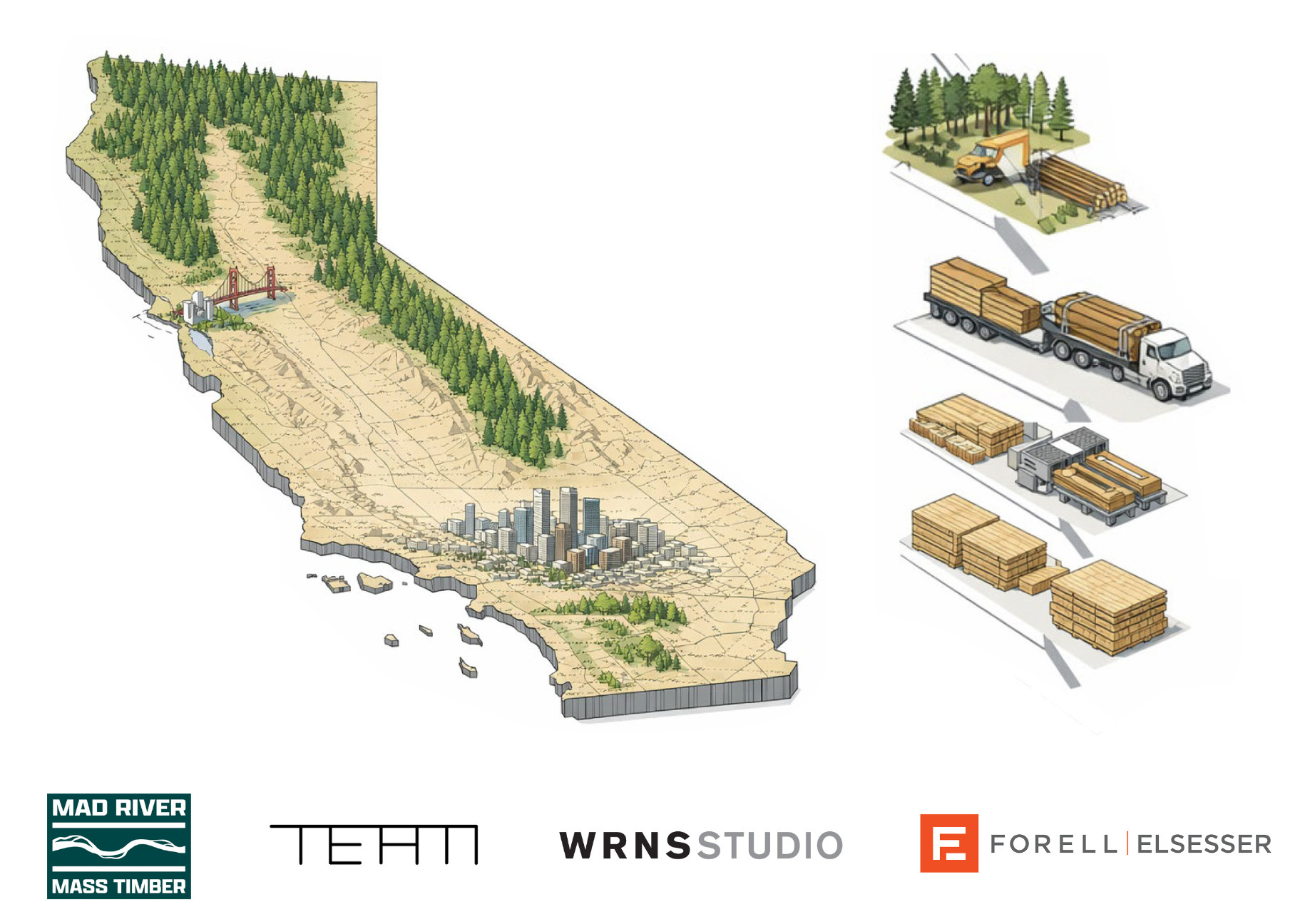
California faces two crises at once — a shortage of affordable housing and the declining health of its forests. The Mass Timber Multifamily Study treats them as a single supply-chain design problem.
The study investigates how dowel-laminated timber (DLT) can be deployed in Type III, IV, and V construction as part of hybrid or conventional structural systems — broadening the range of multifamily projects mass timber can viably serve.
It examines prefabrication strategies to improve speed, cost, and quality on site, and explores the code pathways required for broader adoption across California's housing stock.
Findings will be shared with developers, AEC firms, agencies, and policymakers as an adoption playbook — a practical reference for the teams who will ultimately build with these systems.
The initiative was announced on April 2, 2026 at the International Mass Timber Conference in Portland. A Peer Review Advisory Board of developers, builders, and mass timber experts informs the work.
Dowel-laminated timber: simple performance
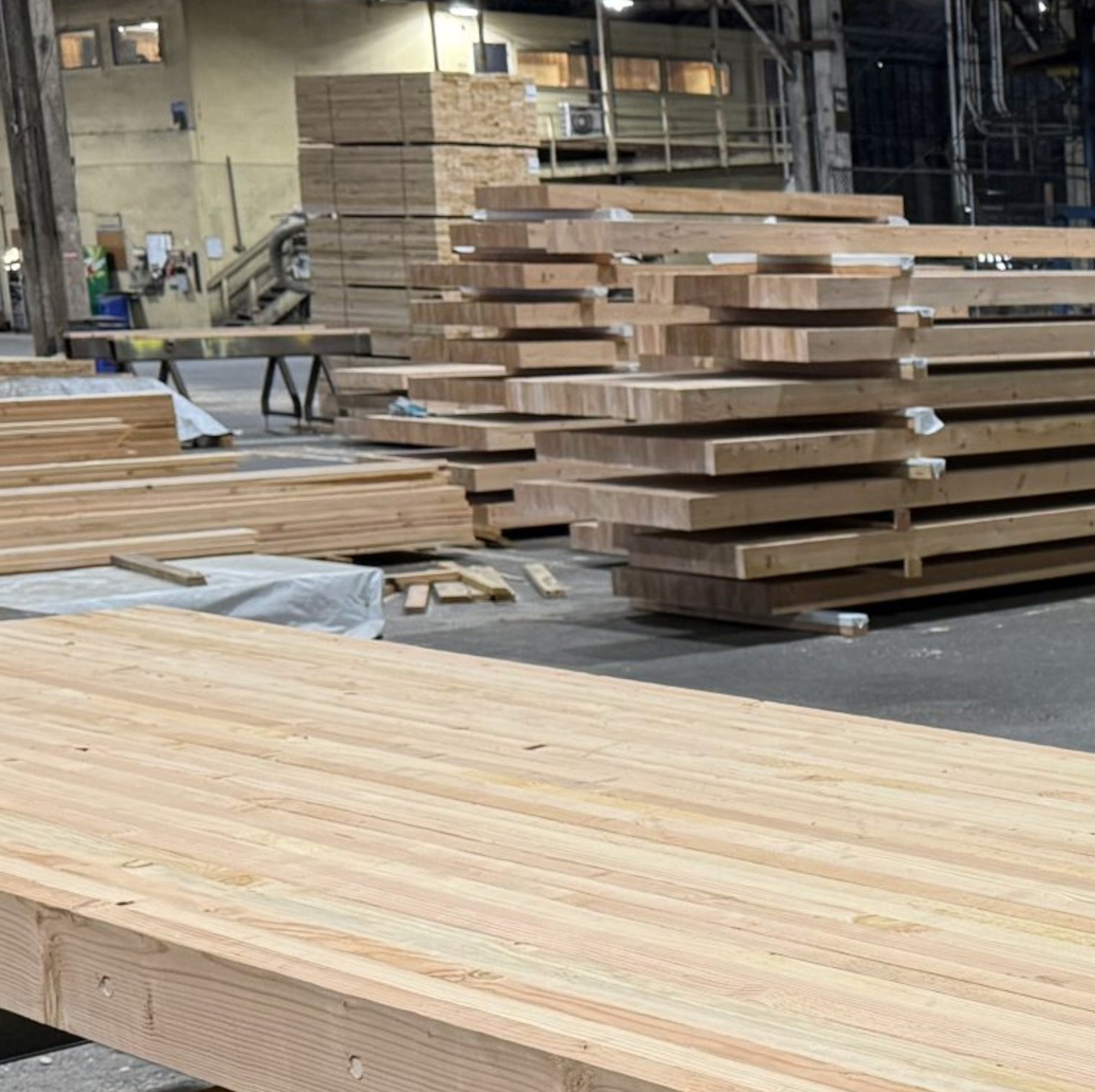
DLT is a mass timber panel made from dimensional softwood lumber held together by hardwood dowels — no adhesives, no metal fasteners, no plastic. The result is a structural panel that performs like a slab, assembles like a kit, and traces cleanly back to the forest it came from.
For this study, the wood supply is sourced from wildfire-mitigation and forest-restoration work in Northern California, converting a low-value byproduct of forest stewardship into high-performance housing material.
For depth on DLT manufacturing, species, and specifications, see Mad River Mass Timber →
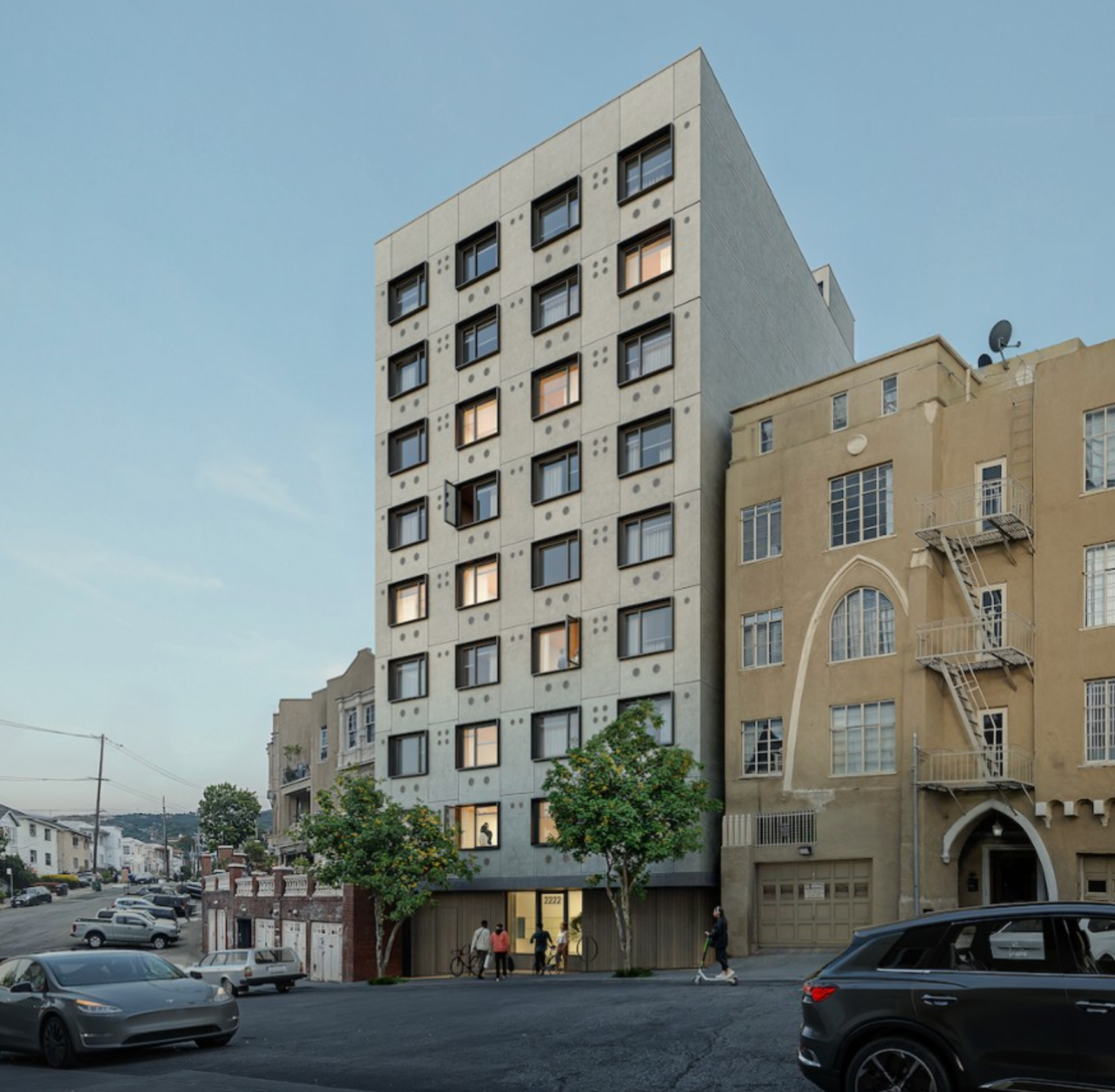
An 84-unit test in Ivy Hill.
The study is anchored by a real project: an 84-unit multifamily development in Oakland's Ivy Hill neighborhood, designed as a hybrid DLT structural system and tracked through design, permitting, and construction.
The pilot's purpose is to pressure-test baseline assumptions — about cost, about schedule, about how the California code actually handles a DLT hybrid system at this scale. Where the numbers work, the playbook extends. Where they don't, the research is honest about why.
Alongside the base case, the team is also exploring alternative unit mixes and technical details to show the range of what's possible on a comparable site.
Four partners, one supply-chain question.
-
Mad River Mass Timber
DLT panel supplierCalifornia's first vertically-integrated mass timber manufacturer, producing all-wood DLT panels from Northern California forests.
"We are building a local supply chain that regenerates our forests, communities, and economy." George Schmidtbauer, MRMT
-
Team Projects
Developer and architectConnecting mass timber technology to real pipeline projects, and validating cost and schedule assumptions on the ground.
"DLT is the key to unlocking additional urban infill density." Zachary Heineman and Cory Collman, Team Projects
-
WRNS Studio
ArchitectExploring DLT multifamily typologies across construction types.
"Let's connect forest health with housing delivery." Ben Mickus and Emily Jones, WRNS Studio
-
Forell Elsesser
Structural EngineerEngineering the DLT hybrid system and pressure-testing its code pathway for California multifamily construction.
"Using California wood for California housing." Geoff Bomba and Masume Dana, Forell Elsesser
Follow the study as it moves from design to delivery.